



Platform overview
Detect human, data, and AI threats through advanced behavioral intelligence
Modern attacks look like legitimate activity until your behavioral intel tells you otherwise
DTEX behavioral intelligence connects actions that identify attack progression, recognizing patterns associated with real attacks, not just anomalies.
DTEX collects activity 24/7, on and off network, whether it is interesting at the time or not. By collecting all activity, and not depending on rule triggers, critical wide-reaching context is provided, elevating risks and insights more accurately, before data loss or damage occurs.
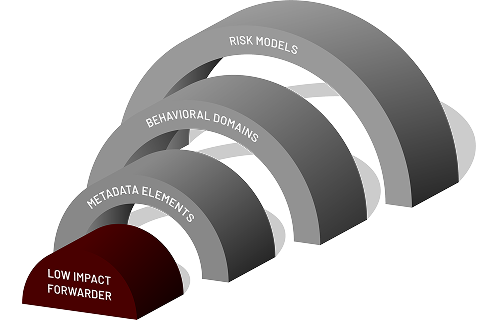
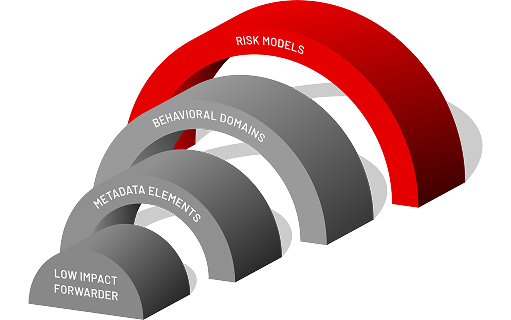
DTEX collects more than 500 metadata elements to correlate activities across devices into one risk score, profiling behavior across processes. This extends beyond low level system data and Windows logs.
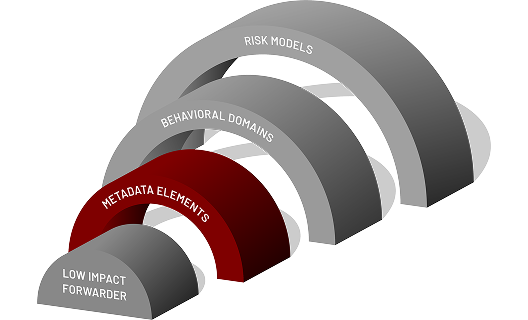
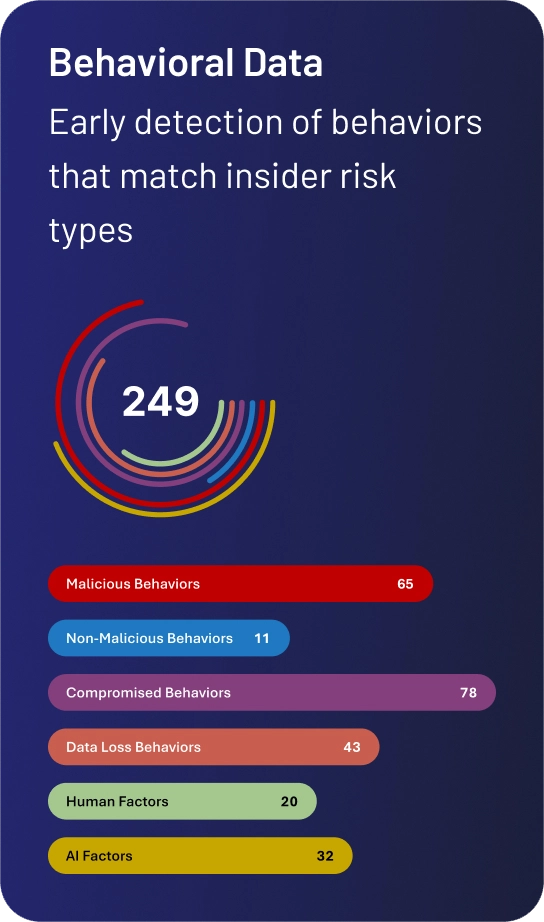
DTEX applies over 12 human-driven behavioral domains, reducing noise through AI modeling, which means the system can automatically tune itself and avoid struggles with parsing and normalizing data every time something changes.
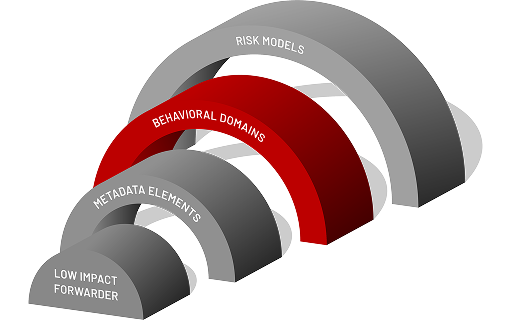
Risk scoring algorithms map full-context behavior risk patterns to intent: malicious, non-malicious, and compromised actions, AI activity, data loss and more. The aggregation of behavior scores and alert stacking provide actionable information on known and unknown insider threats.
Clarity through context is the force multiplier
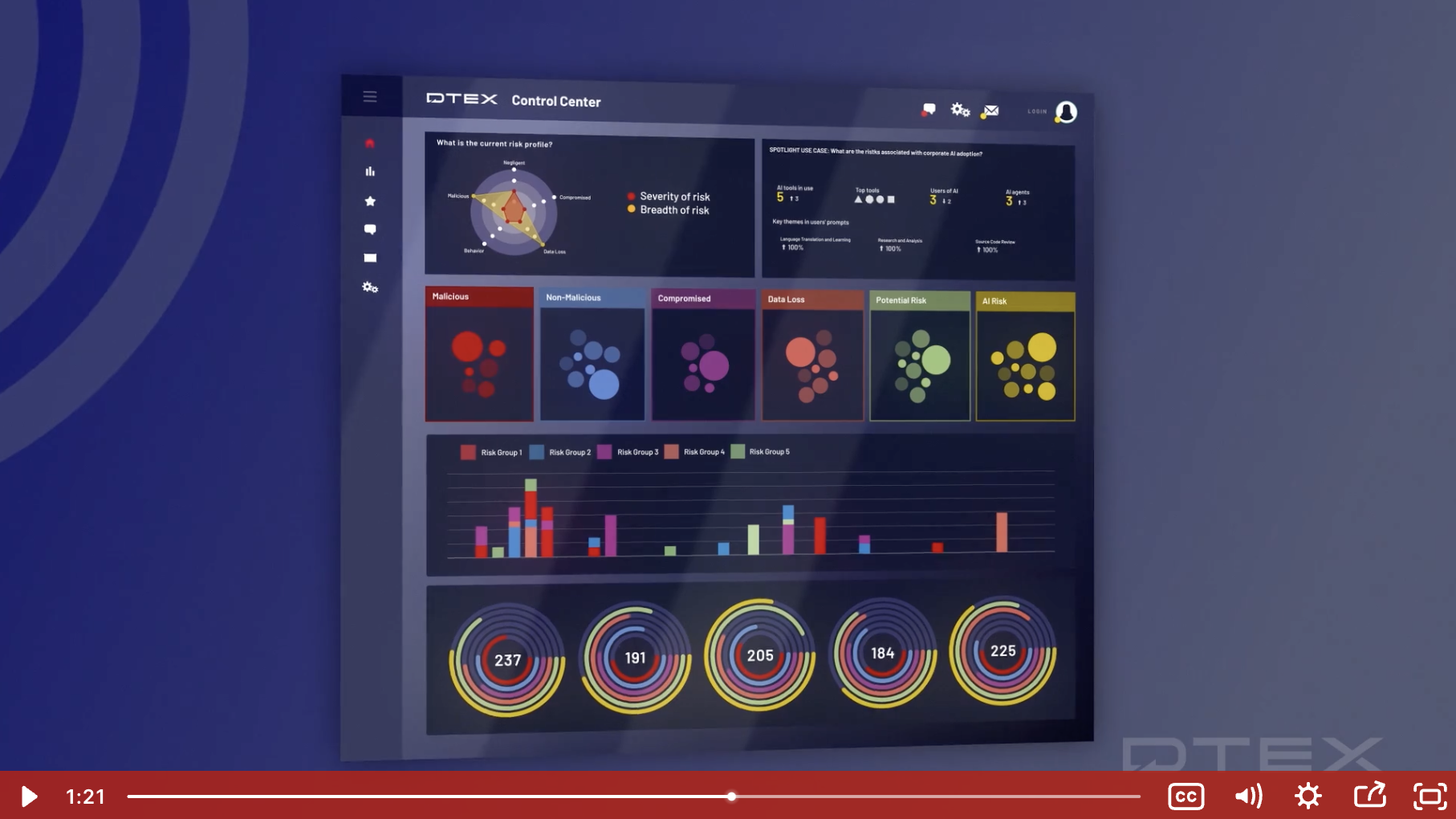
The DTEX Platform provides a unified view of risk through AI-driven risk profiling. With DTEX, insight turns noise into signals and signals into decisions.


Capabilities that enable foresight and action
As organizations adopt AI‑enabled tools, data leaks will accelerate unless visibility and policy catch up. While other technologies may alert on exfiltration, the DTEX behavioral intelligence engine collects and correlates workforce activity at scale, identifying risk before an incident.

Dynamic risk scores
Analyze and baseline behavior by role, department and geography and differentiate between human and AI activity.

Behavioral intelligence that infers intent
Differentiate between malicious, careless, and compromised behavior so appropriate action is taken.

User timelines
Reconstruct digital activity into a single, chronological narrative that shows what a user did, across tools, AI, and endpoints, and in what context.

Complete data lineage
Full history of every file — in use, in motion, and at rest to understand all data movement and modifications.

Privacy first approach
Mask personal identifiers to eliminate inherent bias, protect workers, and comply with privacy regulations.

One click reporting
Insight into business risk with executive and analyst reports that summarize activity and include recommendations.
DTEX Ai3 Risk Assistant
As AI continues to raise the stakes for innovation and risk, it also creates opportunities for smarter, faster, and more risk adaptive security. Ai3 is that opportunity.
Behavioral insights that protect critical systems
- Protect high-value data from privileged users.
- Monitors CLI tools managing cloud-native workloads.
- Detect misuse of admin privileges.
- Differentiates misconfigurations from system sabotage
- Identify slow-moving insiders
- Reveal intent behind actions, not just anomalies, with behavioral risk models
- Prevent systemic outages caused by stolen credentials
- Detect abnormal access patterns and CLI-based data exfiltration
- Identify data leaks from uncontrolled AI activity
- Avoid unauthorized data flows and malicious repurposing of AI tools
Easy deployment and time to value starts now

Deploys in minutes
Lightweight forwarders collect 3-5MB of data per user per day, create no network impact, and do not harm productivity.

360° visibility in 24 hours
Realize enterprise-wide visibility, investigative audit, and protection capabilities within the first 24 hours.

Reporting in 1st week
Get internal risk benchmarks, executive overviews, and actionable recommendations in the first week.

Forensics in days
Identify outlier behaviors that may be malicious, negligent, or compromised within 10 days of deployment.