

Leavers and Joiners
Employee Transitions Create Hidden Risk
New hires receive access before normal behavior is established. Departing employees may collect or move data while their activity still appears authorized. Both create risks that can be difficult to recognize early.
35%
increase in data theft incidents caused by departing employees.
Workforce turnover creates more opportunities for company data to leave with employees.
12%
of departing employees took sensitive intellectual property.
Customer records, employee information, and other sensitive data may leave through trusted access.
75 %
of investigation requests were managed by human resources.
Leaver risk often surfaces through workforce context, making coordination between HR and insider risk teams essential.
*Data from the DTEX’s Insider Risk Investigations Report
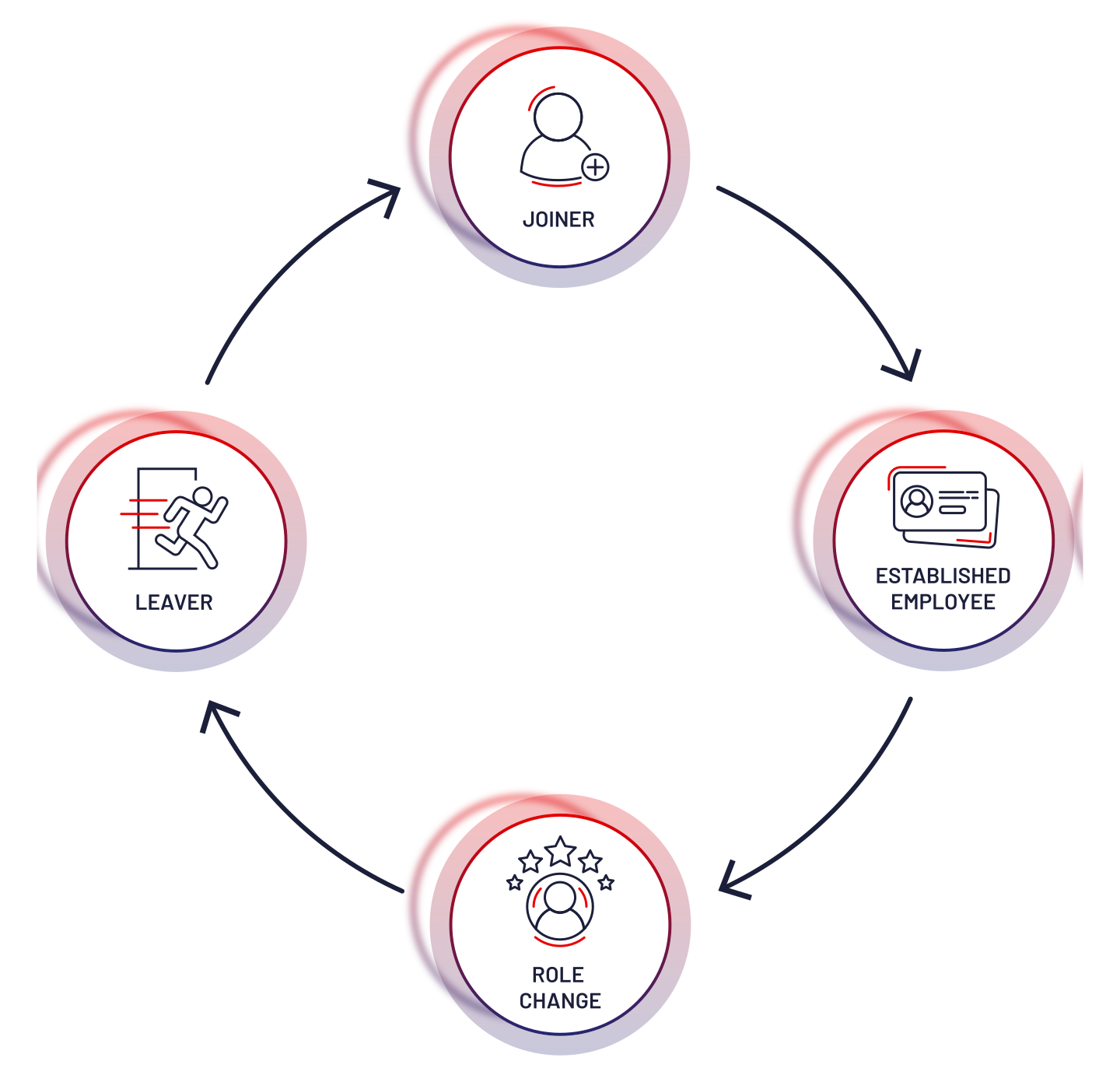
Employee risk evolves from the first day to the last
Joining and leaving change what people can access and how they use data. Risk appears when behavior no longer fits the person’s role or stage of employment.
Access before context
New employees may receive broad access before normal activity is established, making inappropriate use harder to distinguish from legitimate onboarding.
Data collection before departure
Changes in downloads or repository access may indicate that sensitive information is being collected before an employee departure.
Trusted channels become exit paths
During a departure, changes in how employees share or transfer data may signal that company information is leaving the organization.
Access outlasts employment
Applications or shared resources may remain available after a person leaves, even when the primary account is disabled.
New identities and unfamiliar behavior
Without an established baseline, legitimate activity can be difficult to distinguish from risky access or account compromise.
See employee-transition risk unfold
Watch how changes in employee activity can signal risk before sensitive information leaves the organization.
Protect sensitive data through every employee transition
DTEX provides behavioral visibility across the employee lifecycle, from onboarding and role changes through departure.

Employee lifecycle visibility
Understand how activity changes throughout an employee’s tenure and identify when it no longer fits expected responsibilities.

Behavioral baselining
Establish normal activity and surface meaningful changes without treating every new or departing employee as a risk.

Early data collection detection
Identify unusual data gathering or staging that may indicate sensitive information is being prepared to leave.

Data movement tracking
See when files move through trusted or personal channels and determine whether the activity fits legitimate work.

Retained access monitoring
Surface activity from dormant or unexpected accounts and provide context around what happens after access is used.

Investigation context
Bring user activity and data movement into a clear timeline across teams for compliance review.
Add behavioral context to employee lifecycle security
Existing tools can manage employee access and transitions. DTEX adds a deeper level of context around how that access is used, separating routine lifecycle activity from risk.
| Coverage needed | What traditional tools offer | DTEX Insider Risk Management |
|---|---|---|
| Joiner access visibility | IAM and IGA provision accounts and permissions based on policy. | Adds behavioral context showing how new users interact with systems and data after access is granted. |
| Role and access alignment | Access governance tools show assigned privileges and support access reviews. | Identifies activity that no longer fits the user’s role or established behavior. |
| Pre-departure risk | HR and identity systems record employment changes once a transition begins. | Surfaces changes in data collection or access that may warrant investigation before departure. |
| Data movement | DLP applies policies to content, channels, and destinations. | Connects data movement with the user’s broader behavior and sequence of actions. |
| Retained access | IAM and offboarding workflows revoke known accounts and entitlements. | Detects activity from unexpected or dormant accounts to show how access is used. |
| Investigation context | SIEM and endpoint tools aggregate technical events and alerts. | Builds a user-centered timeline for review across departments. |
The next challenge: managing third-party access
Contractors and vendors may retain access beyond the work they were hired to perform. See how behavioral context helps identify compromised accounts
FAQs about leavers, joiners, and employee transition risk
Leaver risk is the potential for data loss, unauthorized access, sabotage, or policy violations before, during, or after an employee, contractor, or third party leaves an organization. It can involve intentional data theft, careless data handling, compromised credentials, or access that remains active after the working relationship ends.
Joiner risk is the security and data exposure that can arise when a new employee or contractor receives access before normal behavior is established. It can include excessive permissions, access that does not match the person’s role, unusual early data activity, compromised credentials, or a fraudulent identity.
Departing employees often retain legitimate access to valuable data through their final day of employment. Risk increases when they begin collecting more information than usual, access unfamiliar repositories, upload files to personal services, send information to personal email, or use other destinations outside their established workflow. Not every behavioral change is malicious, so investigation requires context.
Organizations can look for connected changes in behavior rather than relying on a single event. Relevant signals can include unusual data collection, broader access, archive creation, new cloud or email destinations, removable-media use, unexpected working hours, or activity that differs from the employee’s established pattern. DTEX correlates these behaviors to help teams identify and investigate meaningful risk.
DTEX provides behavioral visibility into how users access systems and interact with data before and after a departure. It helps teams identify unusual collection and movement, investigate unexpected account activity, and understand what happens when access is used. DTEX complements identity and offboarding tools that provision, review, and revoke access.
The latest leavers and joiners resources




See employee transition risk before data walks out the door
DTEX helps teams recognize risky changes in employee behavior before they lead to data loss.