

China Is Protecting Its AI Talent While Pursuing the West’s

MIN
Beijing now vets when its top AI researchers can leave the country, and it has spent the better part of two decades building ways to bring Western talent in.
Both moves reflect the strategic value of human capability in the global AI race. For organizations developing the technologies China is seeking, the implications extend beyond protecting systems and intellectual property. They must also understand how recruitment relationships, outside commitments and trusted access can create pathways for sensitive knowledge to leave the organization.
Recent developments illustrate the growing competition for technical expertise. Chinese authorities have reportedly required approval for overseas travel by leading AI researchers and executives at firms such as Alibaba and DeepSeek. Senior Chinese-origin scientists are trading U.S. posts for top jobs in China as rivalries between the U.S. and China grow. Meanwhile, Chinese institutions keep advertising for overseas chip talent. China-aligned operators have even gone after the people who understand U.S. AI policy and export controls, demonstrating how valuable specialized knowledge and the people who hold it have become.
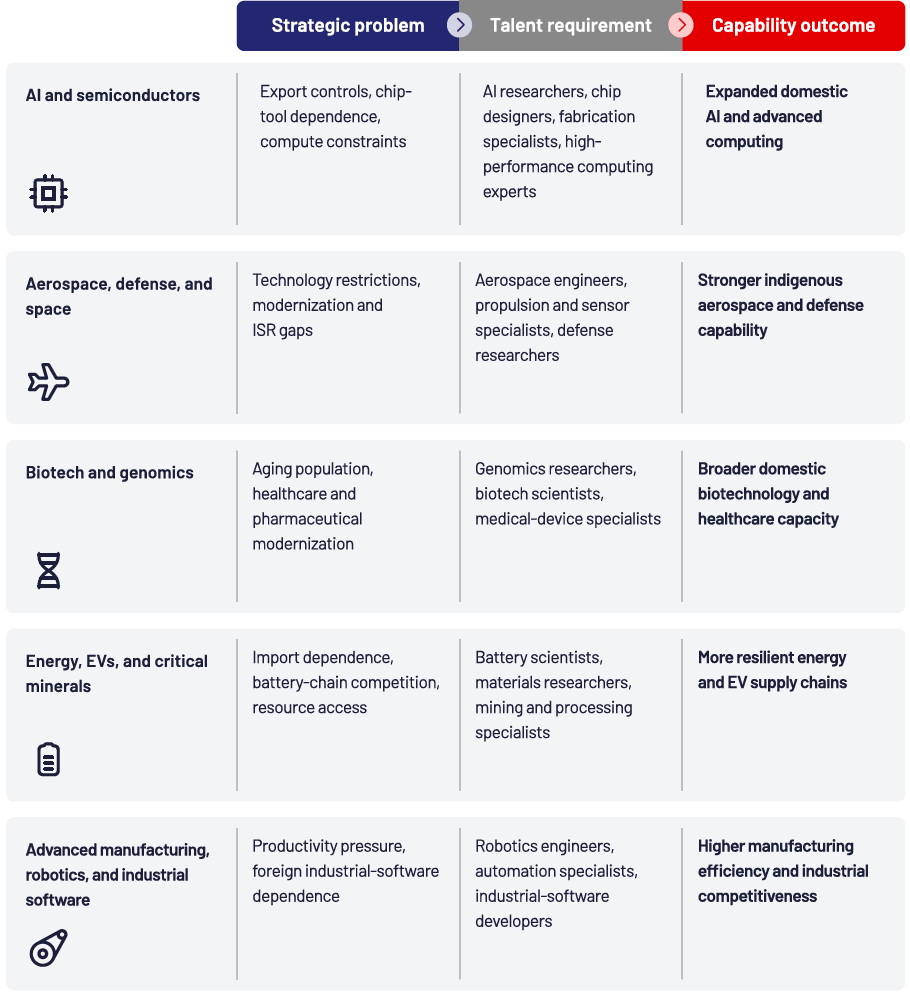
New research from DTEX i³ examines how China’s talent recruitment apparatus has evolved beyond the Thousand Talents Program, with national and local initiatives continuing to pursue overseas expertise across five strategic sectors. The third report in the China’s Insider Advantage series reveals how these evolving recruitment networks create challenges for organizations seeking to protect sensitive technologies, particularly when potential risks emerge through legitimate professional relationships and trusted access.
China’s recruitment network extends beyond Thousand Talents
Part Three of China’s Insider Advantage series follows those channels, highlighting national successors and local plans alongside recruitment through universities, companies and innovation clusters. The Thousand Talents Program was only one component of a much broader recruitment apparatus, one that continues to evolve through national initiatives, local programs and institutional partnerships. The Center for Security and Emerging Technology identified 43 national-level talent programs and more than 200 provincial and municipal ones in 2020, and that count has not been publicly updated since.
The report highlights Chenguang Gong’s applications to municipal talent plans years before his theft of missile-detection technology. His case illustrates how recruitment relationships and outside professional interests can develop long before unauthorized data movement is discovered, reinforcing the importance of understanding the context surrounding individuals with access to sensitive intellectual property.
Elsewhere, capability acquisition runs through commercial hiring or university partnerships, without a talent-program application at all. These overlapping recruitment channels make it increasingly difficult for organizations to assess potential exposure by monitoring known programs alone.
The AI race raises the stakes for protecting technical expertise
Gong’s case involved sensors. Similar risks extend to the technologies driving today’s AI race. As restrictions on advanced chips and manufacturing equipment intensify competition for technical capabilities, the specialized knowledge held by engineers, researchers and developers becomes increasingly valuable. Protecting that expertise requires organizations to look beyond the systems where sensitive information resides to understand the activities and relationships of those with trusted access.
Former Google engineer Linwei Ding moved more than 2,000 pages of confidential AI chip and infrastructure material to personal accounts while secretly courting PRC-based companies and applying to a Shanghai talent plan.
Together, the Gong and Ding cases demonstrate how outside professional opportunities, access to proprietary technology and unauthorized data movement can intersect. While motivations and circumstances differ, both cases reinforce the importance of recognizing potentially concerning activity before it escalates into an insider incident.
Research funding, senior appointments and commercial opportunities can all serve legitimate purposes. The challenge for organizations is distinguishing ordinary professional activity from emerging risks by understanding the broader behavioral context, including undisclosed commitments, unusual access patterns and unauthorized movement of sensitive information.
Importantly, working with a Chinese institution or accepting an overseas role does not establish wrongdoing. Effective insider-risk assessment requires context, including whether outside commitments are disclosed and whether proprietary knowledge is being transferred without authorization.
Security teams need to track capability gaps instead of program names
Screening for specific talent programs cannot capture a system operating through national successors, local plans, commercial hiring and university partnerships. Security teams and research offices need to connect the capabilities their organizations hold with outside commitments and behavior that could expose them.
The latest China’s Insider Advantage report maps that demand across five strategic sectors, from AI and semiconductors to batteries and biotechnology. While recruitment programs will continue to change and evolve, the underlying security challenge remains: protecting sensitive knowledge by understanding the relationships, access and behaviors that can put it at risk.
Read the report for the sector analysis and documented cases showing how recruitment reaches people with trusted access.
FAQ
China’s talent recruitment continued through national successors, provincial and municipal plans, and wider institutional networks. No single program replaced Thousand Talents across the entire system. Universities, companies and joint ventures also provide channels for acquiring overseas expertise.
AI development depends on specialized expertise as well as chips and equipment. China’s recruitment system seeks people with knowledge that can help close capability gaps in areas such as semiconductor manufacturing and AI infrastructure, supporting its pursuit of technological self-sufficiency.
Organizations should assess recruitment relationships alongside access to proprietary knowledge and relevant data movement. Program names alone provide an incomplete picture. An overseas appointment or Chinese institutional affiliation does not establish wrongdoing; the concern is whether knowledge is transferred without authorization.
Subscribe today to stay informed and get regular updates from DTEX